
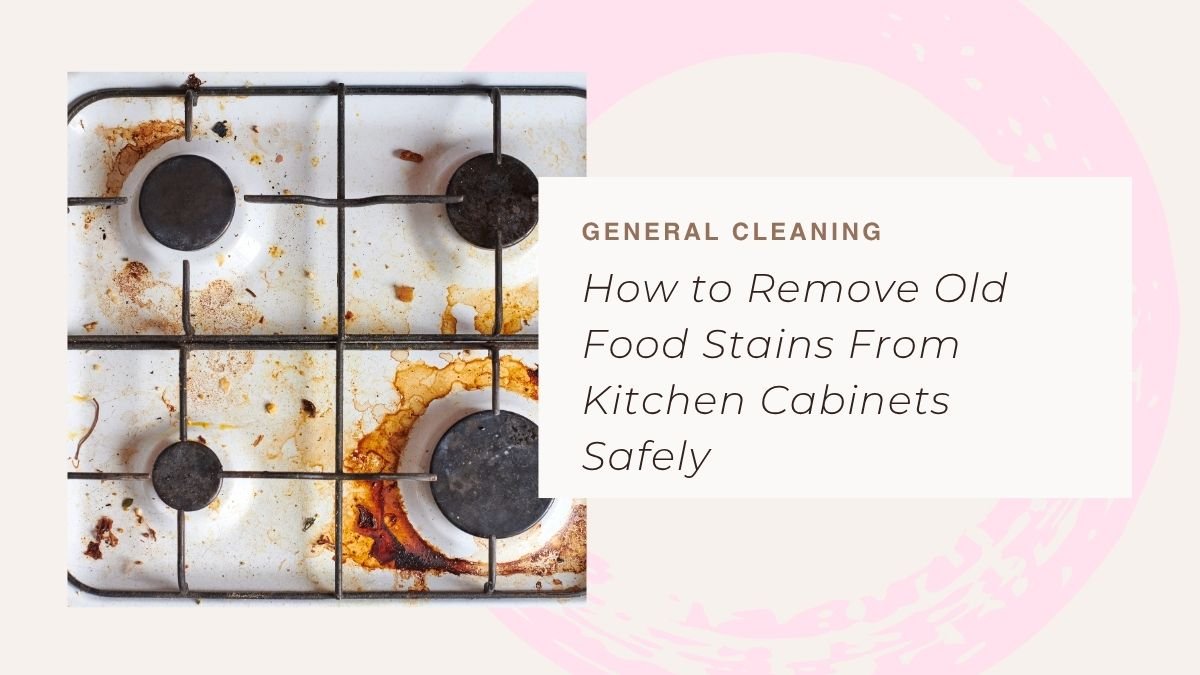
The stains and oils creep on the wood cabinets silently. Stains can be avoided by wiping them off with a damp cloth and by cleaning them regularly.
Do not work with scouring pads, hard brushes or ammonia, it might give the fibers a spreading effect and break up. Prepare a mild cleaning solution and first, test it on a concealed part before cleaning.
Identify the Type of food stain
We can not go all the way to be stain free, unless we wrap food in plastic or use bare hands to eat but there are ways to limit the number of food mishaps. The quicker you respond to a food stain and the faster you treat it and apply the correct treatment techniques, the higher your opportunities are of getting rid of food stains.
This will inform you what type of material to use to remove the food stain and what kind of material to store in the cabinet based on what kind of material was used. Certain foodstuffs are infamously hard to clean, such as tomato based sauces (spaghetti or pizza), mustard and ketchup, oily condiments like salad dressing or mayonnaise, juices of berries, chocolate and cooking grease.
The type and colorfastness of fabrics are also involved in the removal of the stain. To illustrate, when subjected to bleach, cotton, wool and silk will not bleed whereas polyester and nylon do not react to water and dyes. To obtain the best results, refer to the labels on the care and test a non-colorfast area with regard to colorfastness and sensitivity.
There are some common household products, which can assist in removing a considerable amount of food stains. Washing with a weak solution of detergent and warm water may help and pre-washing or soaking in a light detergent can help with stubborn stains.
The old or faded stains, which can not be taken off using a commercial spot stain remover, might need a commercial spot stain remover.
In place of commercial stain removers, a natural one e.g. vinegar with berry stain or baking soda with grease may be used. When you have a stain on a piece of wood then you can use a cleaner that is specifically designed to get rid of the stain on kitchen cabinets.
Abrasive scrubbing and use of harsh chemicals should be avoided as they damage the finish and are permanent and cause long term damage.
Wipe off Loose Dirt and Surface Grease.
Whether using wood or laminate cabinets in your kitchen, chances are that they get dirty. Grease, food smears and dust can be stained in kitchen cabinets. Luckily, you need not spend money on costly cleaning solutions or rough chemicals in order to maintain your cabinets clean. Often, a little warm water and a minimal bit of weak dishwasher soap may be enough.
It is necessary not to apply very acidic or alkaline cleaners on your kitchen cabinets because they can destroy the wood and laminate surfaces. Wood (iron tannate discoloration degradation) will tend to be darkened by the acidic cleaners and laminate surfaces are likely to be degraded by the highly alkaline cleaners.
When you need to use an aggressive cleaner to wash your cabinets, make sure that you wipe it with a lint free cloth then dry it off.
You have to clean loose dirt or grease found on your cabinets mix a small portion of a little dish detergent with a damp sponge or soft cloth. Wipe the oily surface with wiping until all the soil is seen. Also do not rub excessively this may scratch your cabinets or cut into the laminate surface.
Blot all the water using warm water and then dry. The more time your cabinets are in contact with water the better as the laminate may warp when it comes in contact with excessive water.
The best way to use a damp sponge to loosen dirt and surface grease is to use warm water and low-fat, low-sodium dish soap, e.g., Dawn(r) Platinum. The special equation of Dawn(r) Platinum solves the grease particles and disintegrates them, hence they can be removed easily with a wet sponge or soft cloth.
Always make sure that when cleaning the surface of your cabinet, you wipe it using a clean and lint free cloth to eliminate any remaining cleaner which leaves a streak.
Third action that can be taken to eliminate grease on kitchen cabinets is to cook using low temperatures, which will also minimise the undesirable oil splatters. Wiping the splatters also as they appear is important since grease is difficult to clean the longer it remains on the surface.
Soften Old and Dried Stains on Food
It has to be scoured to remove a build up of grease and other stubborn deposits, but be careful not to harm the wood. Heavy chemical and rough scrubbing may destroy the finish of your cabinet. In like manner, on exposure to too much water, the wood could swell or bend.
Start with a hot microfiber fabric and hot water. A little bit of liquid, thin dish soap can be used safely in the event of painted or laminate cabinets. Rather, it is better to smell and rub dirt out with rubbing alcohol. The game here is to make sure that the surface is dry within the shortest time possible.
The more time they are exposed to water in the form of longer wood and laminate surfaces they have a tendency to form or swell.
The cracks and crevices can be reached with the aid of a soft brush as nylon or toothbrush. These areas are the most likely to be covered with the greasy residue and may not be easy to clean using a cloth. When you are using powdered dishwasher detergent, wear rubber gloves to avoid roughness of the scrubber on your hands.
Kitchen cabinets have most food stains that can be washed off by rinsing with water. The other alternative that you can try is vinegar to water (part to part). Care must be taken however, as vinegar is acidic, and can dissolve off the top layer of some paints.
A commercial wood cleaner might be used in case of dirty and stained cabinets. Look for a product that doesn’t contain harsh chemicals or bleach, as these may damage the wood.
A basic oil-based cleaner is suitable, if you are taking your DIY path. Murphy oil soap is an old-school that is soft and effective in cleansing. The cleaning products made of plants (Method or Mrs. Meyer) will also be worth trying.
When cleaning, do not use any cleaning solutions that have ammonia or phenol, which is too strong to most wood finishes. In cleaning your cabinets, do not forget to dry them properly so that they are not warped or swollen up. This is particularly necessary to laminate and wood cabinets.
A quality microfiber cloth is preferred to paper towels or regular rags in order to get the best results.
Easily Clean Grease and Residue Sticks
The film that develops on the inner surface of the kitchen cabinets is not a dirt, but rather a mixture of flying cooking oil that has landed, oxidized and become sticky. Combined with dust and humidity, the doors on either side of the stove will be gummy and sticky in comparison to the rest.
That is an issue, particularly in damp places such as Orlando and central Florida. but it will not spoil your cabinets. The best way of washing the cabinets without ruining them is by avoiding the source of grease and washing the affected areas on a frequent basis.
Even good quality of kitchen cabinet finish are made so as to be resistant to grease and oils, but at one time or another all the good finishes wear out and grease dusts on surfaces. The outcome is a tacky sticky material which leaves a stain and a dull finish. That is why it is important to maintain it on a regular basis, particularly in humid areas.
The majority of the homeowners believe that their sticky cabinets are the consequence of the defective finish, but the issues are often much easier. It is a coat of ancient grease which has been riveted there over the years.
This may be the remnant of the previous oil polish, the aerosol cooking spray over spray or oxidized cooking oil. Warm water and dish soap can be used to lift it, a few light strokes and a clean cloth or sponge per lift. Rinsing a fabric merely amplifies the liquid remains and worsens the situation.
Where that fails, commercial kitchen degreasers which can be used on wood cabinets can be found. However, it should be noted that one should always read the label and always put any cleaner in an inconspicuous area first before the cleaner is applied to ensure that it does not ruin the finish and discolouring.
The majority of these products are very alkaline, and are known to dissolve engine grease, but will also polish and take the shine off painted or stained cabinets. Keep them out or at least dry the tops of cabinets immediately and never leave them without being dry.
In addition to the cleaning treatments offered, Wellborn advises owners to keep the abrasive sponges and scouring pads, Ammonia solutions and cleaners out of wood cabinets that could scratch or strip protective finishes. Rather, consider your cabinets as furniture and apply weak cleaners.