
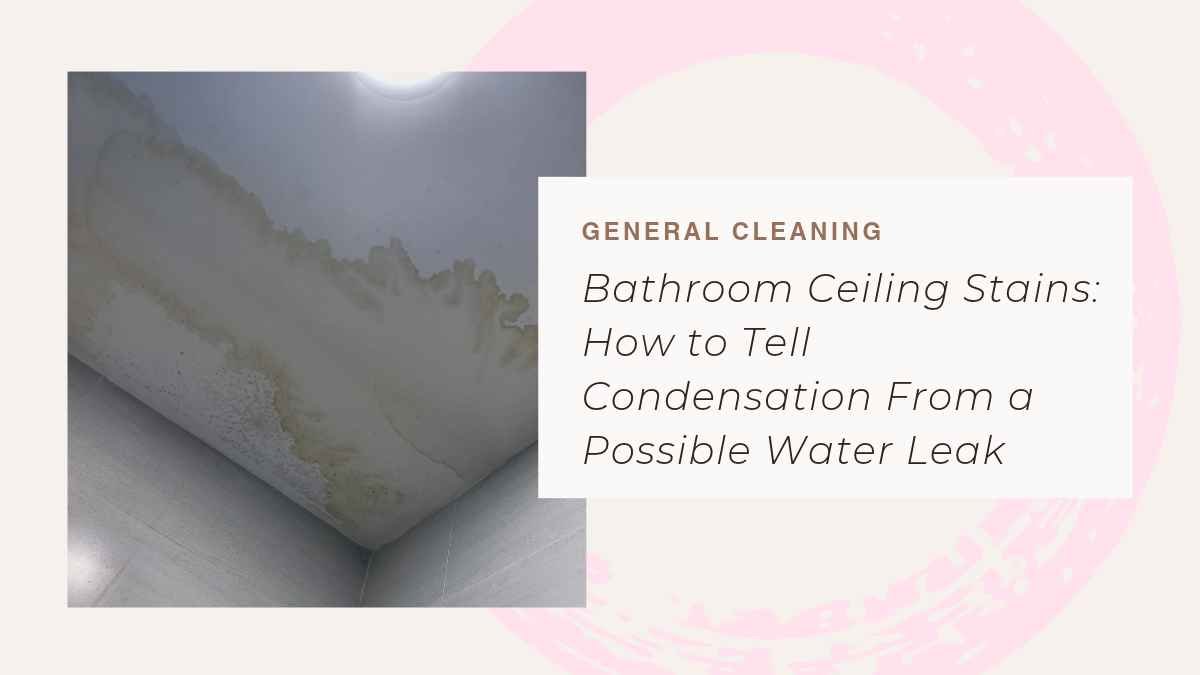
If you notice ceiling water stains repeatedly, it means that you are having a moisture issue. Ordinary homeowners apply symptomatic treatments – such as paint and patching – but don’t fix the underlying problems. Over painting will only aggravate the damage, and create additional insurance troubles.
Not ventilating bathrooms quickly erodes the situation, causing humidity to cling to cool surfaces, such as ceilings. Normal latex paint allows mineral salts and tannins to permeate the paint, resulting in frequently recurring stains.
Common Causes
When water spots reappear on the ceiling without an obvious leak it’s time to take action. Recurring stains always mean moisture issues are occurring and need to be addressed with a full examination and permanent solutions.
Paying attention to them helps to prevent the damage from happening, the cost of repair, and the hazards of mold.
The appearance of individual stains varies according to the stain color, severity and source of moisture. BROWN or rust colored staining points are a sign of moisture sources such as dissolved minerals, tannins from wood, and rusted metal parts. Yellow or spotted stains can be caused by oily stains, nicotine or certain forms of water damage.
If your stains are bleeding through your freshly painted walls, it’s usually a sign that there is an active water leak and might need to be treated immediately to reduce your risk of water damage, mold and other issues in the surrounding area.
When it comes to a ceiling that is just starting to bleed through fresh paint, the time period is typically less than 48 hours. In cases where you are having this issue contacted a professional restoration company to take a look and implement emergency fixes.
Persistent water stains need immediate remedy and a problem that emerges within few months of painting signifies a continuing moisture issue that will make it impossible for drywalls and insulations to last.
This is commonly a result of some kind of leak, either a leaky toilet wax ring or a leaky supply line fitting that doesn’t leak enough to be visible in the water but slowly soaks the insulation over the course of weeks and months until it can be detected on the ceiling underneath.
The most common places for moisture-related ceiling stains are kitchens, laundry rooms, bathrooms or attics. Unappealing water marks may reappear on the ceiling owing to humid climates, inadequate ceiling insulation, showering, cooking, laundry and HVAC systems venting to the attic.
Other physical conditions that suggest widespread hidden mold growth, such as musty odors and crumbling drywall also requires professional testing of mold and a moisture control treatment of the area.
Damp Spots
If you see water stains, it’s likely that the issue is condensation or a leak. However, until a water leak is found, the stain just reappears. A professional can determine the source by doing a thorough inspection.
Shower trays and bath tubs have common problem areas for leaks. That’s because of the large number of joints and caulk seams that deteriorate over time.
This enables water to penetrate the ceiling, into the floor and walls of an individual house below. The most visible indications of these leaks are water stains and mould growth.
Other signs of a leak are dark or gray stains that appear on the ceiling, particularly if they have a fuzzy texture. This means that there is a great amount of mineral and tannin in the water. Condensation stains are generally related to humidity, and will require a dehumidifier or other ventilation to remove.
Occasionally, a leak in an attic may cause water spots on the ceiling in the living area below. It’s because a clogged up air conditioner condenser line or insufficient regular duct cleaning can cause water to accumulate in the attic and eventually ruin the ceiling surface.
If this is the situation, a professional may be able to advise on how to solve the issue and avoid future issues.
Stains, particularly on the ceiling, are often caused by a leak in the roof. This can be due to many factors such as an older or damaged roof, inadequate ventilation or ice dams during winter, to name a few. If such stains occur they should be rectified immediately to avoid future compromise.
Sometimes yellow or black stains occur and do not turn black/blue/grey and they are probably due to a leaky water pipe. Minerals and organic contaminants in water cause water stains; they permeate regular latex paint.
These will require covering by removing the stain, applying a stain blocking (shellac or oil based) primer, and painting over it. Otherwise, the stain will return in 6 months or sooner. A good repair involves locating and correcting the leak’s original source, completely drying the ceiling, and priming and painting.
Signs That a Ceiling Stain May Be Caused by a Water Leak
Often stains on the ceiling around bathroom fittings are not easy to determine. A lot of them have to do with concealed leaks which slowly consume materials like wood and drywall over time. The leaks are concealed and unnoticed can end up causing serious water damage and expensive repairs.
One sign that a problem exists is the stain on the ceiling, but other indications may be musty smells or any bubbling wallpaper.
A new stain is lighter in colour and may be slightly moist. The stains are darker and dry when touched if they are older. Fresh stains are found in warm, humid room areas and older stains are found in cooler, less-used rooms.
A water stained ceiling, if it is fresh and has been there for a few days, probably means that the problem has just started and isn’t something that can be left to run its course.
To verify this, perform a very basic moisture test: Take a clean finger to the stain and then compare it to a sample of dry wall. If the wall is spongy, it is an active problem and the water stain will probably come back.
In the same way, if the water stain returns after you apply a new coat of paint, it’s likely that the source of the moisture is still active. Latex paint can bleed if there are stains or mineral deposits below the top layer.
These cases should be stained with a shellac-based or oil-based shellac stain-blocking primer to help avoid bleed-through.
The best way to deal with a water stain on the ceiling is to fix the source of the water before repairing and priming the ceiling. If the ceiling is stained and the water issue is not resolved, the stain is sure to reappear after painting.
A stain on the water where the plumbing fixture is generally indicates a leak in the supply line or a bad wax ring. Shut off the water to the problematic fixture and contact a plumber to address the problem prior to trying to clean or paint the area.
Water could also discolor the ceiling and create moisture in the attic. Lack of ventilation will keep the humidity of indoor air in the attic and cause it to condense into cool ceilings, particularly in bathrooms and kitchens.
Ice dams in the winter can also force water under roof shingles and leave stains on the inside of the roof without dripping. Make sure to increase attic air flow and if you have a high humidity space, use a dehumidifier to fix this problem.
How to Check Bathroom Ventilation and Indoor Humidity
If the marks you notice are recurring or the result of an emergency water leak, it’s important to find out where they’re coming from and stop it. Concealing moisture problems with a fresh coat of paint will not solve the problem, and in fact, can make it worse.
Check to see if stains occur at the same time or any time, and if they go one way and then another, note this. A stain that always shows up following large rainfall events might be due to wrecking to the roof or drainage problems.
If the pattern rises in the summer time it means it’s a humidity problem. A mark present in the winter time can indicate ice dams or attic HVAC condensation.
Make periodic pictures, preferably from the same spot. This will facilitate comparison of marks over a number of weeks or years, and will aid in marking out improvements. Record the dates of each appearance and if it is preceded by a particular weather event, use of plumbing, a home improvement or change in home habits.
When the water has been saturated with color for a period of time and/or if it has a brown ring, this is an indicator that there is a permanent leak.
The position of the stain also tells a tale. A location close to a fixture or a wall or on an upper level in the room indicates that they may be leaking from a ceiling plumbing drain line, washing machine or dishwasher pipe, attic HVAC condensation or an exterior wall vent.
If the ceiling paint is peeling or the dry wall is mushy, it’s a good idea to test the ventilation system. If the test indicates a problem, have a professional check and repair it.
The simplest method to lessen moisture and humidity within the house is to keep it well ventilated and avoid having a number of problems in the house such as water leakage which causes stains on the ceiling of the bathroom.
Mount a dehumidistat switch to control the fan; automatically activating it when the air becomes too moisty, and regularly clean your vent covers, avoiding blockage.
Keep windows open to get fresh air in; consider installing a window vent in the attic. Quality attic insulation will also regulate humidity and give moisture a barrier to move through the attic.