
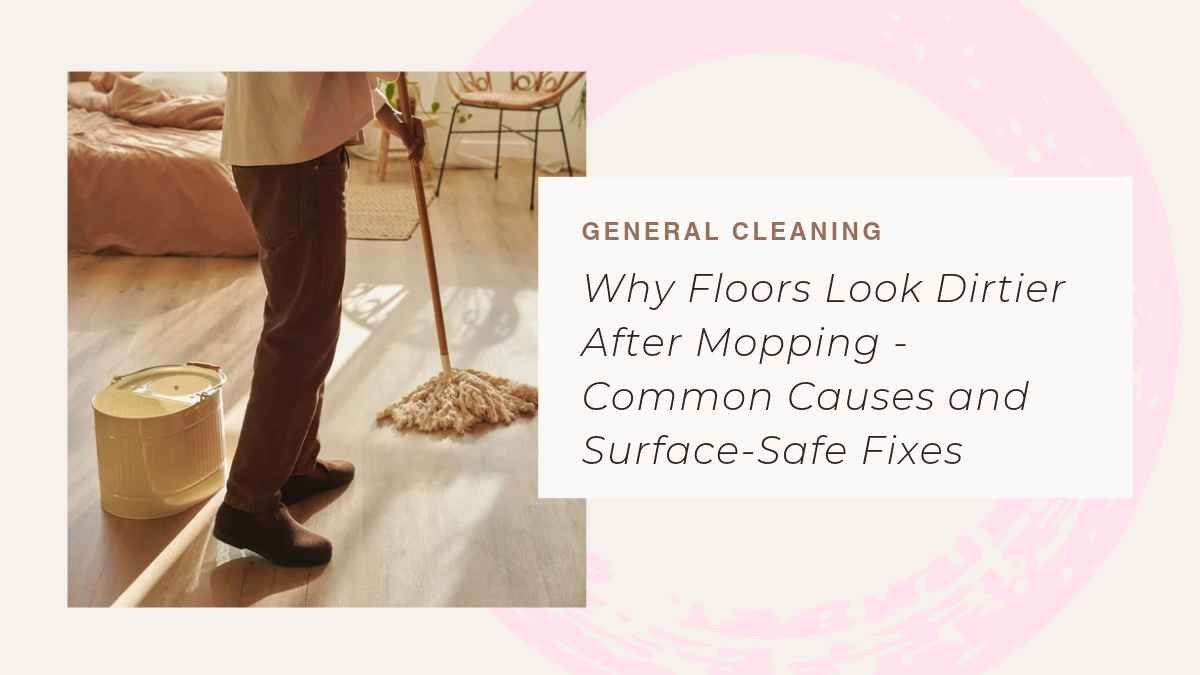
Mopping is done every day to remove the loose dirt and sanitizing the floors. Nevertheless, when the grime has worn through the finish the floors will appear dirty.
In order to prevent this, a barely damp microfiber mop should be used and should be wrung out. A rough floor, one with ridges, requires another method. Forget cotton string mops and sponge mops, a flat microfiber mop with a brush to use on grout lines and rough places is the most efficient.
Soiled Mop Water Leaves Assaults Floors
When washing with dirty mop water it leaves its traces which makes your floor even dirtier. This occurs when the cleaning solution has been under diluted too much or because it is not the appropriate kind of cleaner in your type of floor.
Usually, you will desire a cleaner that is specific to your tiles, hardwood or luxury vinyl plank (LVT) flooring. When you use an inappropriate cleaner, it may also leave a sticky stain on your floors, rendering them streaky and dirty.
The next error that is shared is that of failing to change the mop water after a session of mopping. Once the mop becomes evidently dirty then it is time to switch the water. This will guarantee that the new cleaning solution is applied on the floor and prevent the diffusion of dirt throughout the room.
You should also learn how and where you can get rid of dirty mop water. Ideally it is best to pour mop water into a special service sink or utility sink or floor drain that flows to the sanitary sewer in institutional and commercial premises.
These are specially-made drains that accommodate wastewater with cleaning products and are less clogging since the pipes are thicker. Mop water should not be disposed of in the kitchen sinks, as this may cause contamination and growth of bacteria in foods.
The toilet is an appropriate disposal method in houses in the event it has not been contaminated by heavy debris.
Good reusable microfiber mop can do wonders in the appearance and the feel of the floor after cleaning. Even some spin mops, as well as traditional cotton string and sponge mops, do not pick up and hold onto dirt and bacteria as well as a high quality microfiber mop.
These mops are also a lot easier to use because they don’t require rinsing or wringing, and have large heads for cleaning a larger surface area.
The cleaning solution is also retained more by microfiber pads compared to cotton or foam, which facilitates cleaning the entire floor and localizing corners and other difficult to reach places.
And, they can be washed over 200 times without losing their properties. This is why reusable microfiber mop is a great investment to any person who is concerned with the looks and life duration of their floor.
The Consequences of Overuse of Floor Cleaner
The most frequent mistake is to believe that the bigger amount of floor cleaner the better. However, it is very sad that adding a bigger quantity of cleaner than the recommended one can lead to sticky floors since when it is applied in excess, it leaves behind a film, which is hard to remove by scrubbing.
This is more so with the case of eco-friendly cleaning products where many utilize a greater quantity of plant-based ingredients that must be rinsed more vigorously.
The other typical mopping error is to fail to clean the mop according to use. Then a dirty mop is more apt to scatter dirt than to take it off, and may even scratch the floor with pebbles.
The most effective is investing in a good quality of mop system with another bucket of clean and dirty water or spin mop that can be wringed to squeeze out the cleaner.
The cleaning professionals suggest that an individual should select a cleaner that is developed based on the flooring within the facility, as opposed to just seeking out an ecologically-friendly brand. A floor polisher of wooden or tile floor will generally be created to better eliminate sticky residue and leave no extra cleaning compounds.
To prevent sticky floors it is important to keep the mop and the mop water clean and fresh. There are conventional string mop and a rotating spin mop that has a dual bucket system; in any case, always begin the mopping process by cleaning your equipment, and replace the mop water regularly.
This ensures that any residues are not applied to the floor again and eliminates a build-up of dirt, which can be reintroduced onto the floors during cleaning.
Lastly, do not leave out the rinse under clean water. It is an underdog in the floor care industry because this process removes any residual cleaning chemicals and dissolved dirt to give you clean floors.
It is also a significant last step when it comes to tackling sticky floors because it will enable you to push off any new residue that comes along when it is still tender before it becomes a sticky mess.
Mopping Mistakes and How to Avert them
A mop and a bucket of cleaning solution look pretty easy, yet a little more consideration and care are needed to avoid floor cleaning errors. A proper cleaning product and method ensures a good clean which safeguard your floors and the environment.
To prevent the buildup and streaks of dirt, avoiding the typical errors common to floor cleaning such as sweeping or vacuuming your floor before mopping, using the incorrect cleaning product to clean your floor, and swapping mop water will help to prevent dirt build up and streaks.
Too Much Water While makes the floor cleaner, but may lead to significant damage with too much water. Over-soaking or flooding your floors will swell them, warp and separate.
The additional water also lingers on the floor longer thus promoting the growth of moulds, scratching the protective coating and creating stains. Buy a microfibre mop head which leaves the floor with hardly any water and have a dehumidifier, fan or open windows so that drying would be quick.
Selecting the Inappropriate Cleaning Product Most of the homeowners and even professional cleaners would pick their cleaning products according to flashy labels, instead of the floor material they are intended to clean.
The application of a floor cleaner that is supposed to be used on natural stone on wood floors causes damage to the wood and leaves a sticky residue behind. Likewise, when steam cleaners are applied on hardwood floors, they may destroy the finish and create water stains.
There are many types of absorbent materials used to make mops, including cotton or microfibre, and each of them possesses certain peculiarities.
To achieve the most successful outcomes, a wet mop that was versatile is a good option since it may be used on a variety of floors. It’s also important to make sure you’re rinsing your mop head often to prevent it from building up soap and dirt.
Whether it’s because you aren’t cleaning your floor regularly or you are cleaning with the wrong cleaning products, dirty looking floors can be a serious health hazard in busy homes.
Dirt is not only unsightly, it contains bacteria, scrapes the protective layers, and may form slick surfaces that can be hazardous to both adults and children to walk upon.
Establish a cleaning schedule and adhere to it. Clean floors can easily be kept with light cleaning every day compared with cleaning nasty grime after years of neglect.