
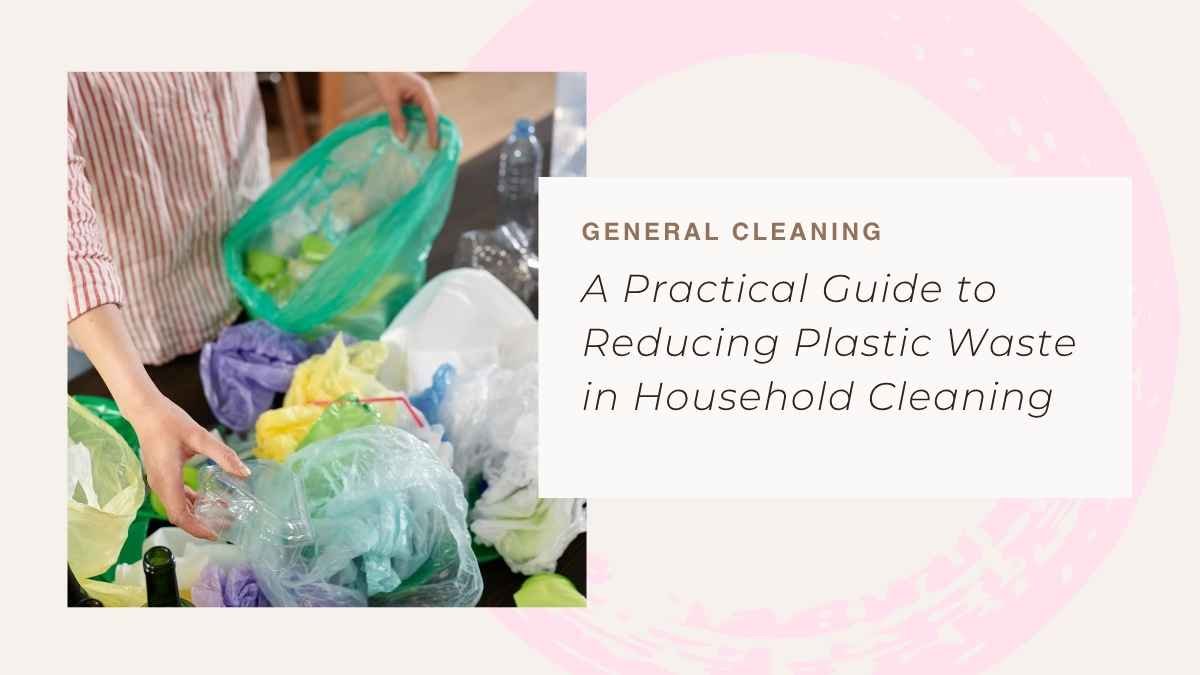
The reduction of plastic waste does not necessarily have to be complicated. Use safe cleaning products and as time goes by, change using disposable products to reusable products.
This is illustrated by using cellulose cloths which are super-absorbent and can be washed instead of disposable wet wipes. Equally, rather than having cling films, go with beeswax wrappings that can be washed and reused.
The most effective step towards reduction of wasteful cleaning products and substitution of the former with low-waste products is adoption of reusable rather than disposable products. Different cleaning products like cloths, Swedish dishcloths and mops are common in the house.
Each reusable cloth can replace up to 15 paper towels, and will decrease trash in the kitchen. Also, they are sold in huge quantities without or with minimum packaging. Replacement of full-sized products with refillables can significantly decrease the quantity of plastic waste that are unnecessary and in addition, they can humanize the families.
Change to reusable cleaning cloths
You can significantly minimize the quantity of plastic you touch by using reusable kitchen sponges and cellulose dishcloths, a bamboo brush, and replenishing the cleaners that you use in glass bottles with the plant-based counterparts.
No plastic wrap, beeswax or silicone lids are preferred to preserve food. Instead of the cleaning products being packaged into plastics, select refillable cleaning products, and pay a visit to the shops with refill stations. Prepare your own cleaners using glass spray bottles and store or use empty glass jars to store or make DIY projects.
We should not forget that we cannot possibly get rid of microplastics in our life since they are so ubiquitous and omnipresent in our day-to-day lives, yet we can minimize our exposure by making conscious decisions and little changes, and choosing brands that do not contradict our values. Combined, these activities will result in a green world.
Choose cleaning products that are reusable.
There is one easy way to cut down on the amount of plastic waste at home: to select refillable cleaning products. These products have reusable bottles and have concentrated refill pouches which can be recycled and will decrease your carbon footprint.
Waste in packaging is also minimized because refillable bottles also generate waste in packaging. By recycles every bottle, you will be ensuring that a single-use container will not be deposited in a landfill or ocean.
Furthermore, refillable containers can save significant funds in the long-term outlook and will offer your home cleaning products with a better organization.
Refill-able liquids like the 5L and 20L bottles by Bio-D are available when you desire a liquid cleaner. They will come at reduced prices, thus, you will save in the long-run and make the world a better place. In other cleaning agents around the house use clean glass spray bottles.
Discard the synthetic kitchen sponge, and replace with cellulose or bamboo bacteria which do not transfer a microplastic fiber into your food and water. Visit zero-waste shops where you may bring your containers to be filled. Do not purchase new clothes and furniture that is made of plastic or purchase second hand.
Single use cleaning wipes should not be used.
Cleaning wipes that can be thrown out are convenient to disinfect the surfaces, and the high touch points but contribute to plastic waste and landfill. As an alternative, you can replace these products with other products like soap, water or material specific cleaners to reduce the use of these products.
It may not be easy to abandon all the disposable wipes, but you can go far by organizing a gradual process that will entail washing and color painting systems. Good quality reusable cloths can be washed hundreds of times, and are now at a price that is over 90 percent lower than one year of disposables.
The wipes that contain the solvent must be placed in the closed containers and labeled and stored to age up to 180 days which will be transported to be reused or discarded. Air-drying or rinsing of the cloths must be done immediately after their use to minimize the odours and contamination.
EPA requires facilities to document compliance with this, and implement mechanisms to prevent discharge of free solvent into the environment which might be centrifuges, mechanical wringing, screen bottom containers or other techniques of liquid separation.
Use cleaning solutions concentrated
Keeping your cleaning solution in glass spray bottles, and also natural ingredients will reduce the number of packaged products too as well as rely on them less. You can also shop in bulk and shop at zero-waste stores where you can carry your own containers to refill products to eliminate plastic packaging.
Using single-use plastics such as the straws, utensils, and bags, when you can, by always carrying your own reusable ones and asking restaurants not to include the plastic cutlery and plates with your meal. Also greatly reduce the use of plastic, purchase clothes and furniture made of wood and recycled materials instead of plastic.
We may not be able to rid our world of all microplastics but what you do in your home and community will help. Be proud of yourself that you take little steps towards a better future and encourage friends and family to join you, along the way. Keep in mind that it is a marathon, not a sprint: the process may be gradual but it is worth it all the time!
Substitute plastic brushes with environmentally-friendly ones.
A great first step in minimising plastic usage is reusable kitchen and cleaning products which can be started with but you can take the challenge further by not using any disposable products.
During purchases, purchase items without packaging and those that occur in large amounts and visit the stores that accept zero-waste, that is, buy it and refill it with your own containers. Choose reusable materials like menstrual cups, cloth pads, and preserve food in glass jars and bottles.
Stop using single-use plastics: Dining out, bring your own reusable straw, utensil and plate and ask restaurant not to use plastic cutlery and plates. In buying clothes, do not use synthetic fibers which release microplastics during washing.
One should always bear in mind that it is never too late to dispose of plastic in our life in general but we can surely dispose of the additional plastic in our life. Do not only make one little change but make others change. The benefit is that it will be the combined effort that will help in disabling the plastic tap.
Use the same containers of cleaning
When you have used a plastic container or bottle, do not dispose it! Storing them will help to reduce waste using them as storage, drinking glasses or DIY project will also give old containers a second life.
Another pivotal way of curbing plastic waste is to buy in bulk and purchase products that are packaged in non-plastic material or no packaging, at all. It goes a long way to refuse to use single-use plastics, such as straws, utensils, and bags. It will also assist by carrying it with your reusable options as you pick up your take out.
Of course, it is impossible and even unreal to deprive yourself of plastic in the house (it is especially widespread in the most industrialized areas where microplastics are most prevalent), but you can take certain small steps that will help to change something.
Remember to take it slow and easy–a process and not a one-day project. A good place to begin to make conscious decisions is one change at a time! You may also participate in local plastic-free challenges or local groups to get support and encouragement.
Proper recycling of packaging of cleaning products
Household hazardous waste (HHW) is a wide range of cleaning products and it is not uncommon to find house holders in a garage or storage locker with used, yet unused, cleaners.
Fortunately, you can reduce waste, as well, by purchasing cleaning materials that are packaged in material that has been recycled or are refillable. Besides, you can also minimize the HHW waste by purchasing concentrated cleaning solution that requires less packaging per dose whenever you need them instead of purchasing diluted cleaning solutions.
To recycle the packaging of cleaning products that cannot be placed in your curbside bin, you can drop it off at TerraCycle Zero Waste Box that will be re-using to produce new plastic materials.
Note: Recycling has various alternatives, depending on the location. Check with your local program for more information. Plastic bags, wraps and films are also recyclable at grocery and department stores.